
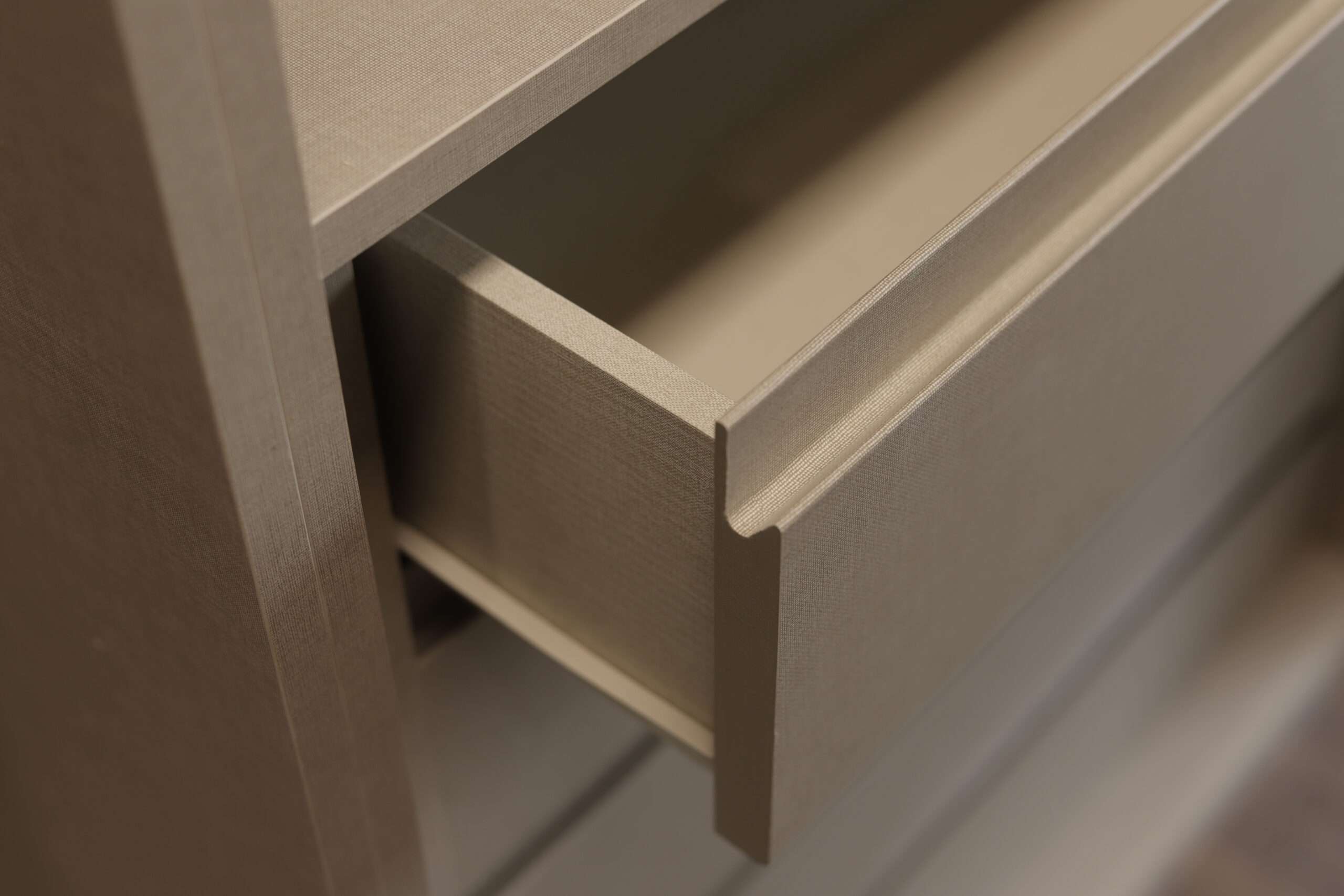
When speaking to customers we are often asked about types of boards that our products can be manufactured in. So below we have a simple guide to explain some differences and definitions of materials. The two most common materials used are MFC and HPL in the furniture and contract sectors.
MFC is Melamine Faced Chipboard – This is the most commonly used board due to performance/cost/choice of finishes.
HPL is High Pressure Laminate – commonly used for Kitchen Worktops and other high traffic horizontal surfaces.
Both Melamine and Laminate have a photo realistic décor printed on to its surface to replicate wood or solid colour finishes as well as metallic and stone effects. You can also specify the texture of the surface so the board when finished can feel as if it has a grain for instance if a wood effect décor, this is known as the “structure” finish.
Melamine is a resin impregnated decorative paper that is made from melamine resin. Typically, 0.2mm thickness. It is a thermosetting plastic which is derived itself from melamine and formaldehyde. Melamine resin is a highly versatile material that is used in a wide range of products, including kitchen cabinets, countertops, and tabletops. One of the main advantages of melamine is its durability and resistance to heat, stains, and scratches. Melamine is also relatively easy to clean and maintain, making it a popular choice for high-traffic areas and spaces that are prone to spills and stains.
Melamine has good resistance to heat and can resist normal temperatures such as hot cups/plates etc, however it can be damaged if exposed to very high temperatures. This means that it is not suitable for use in applications where it may be exposed to heat sources, such as ovens or stovetops.
Laminate, on the other hand, is made from layers of paper that are impregnated with phenolic resin and fused together under high pressure and heat.
The process of creating laminate is called lamination. Laminate is known for its durability, resistance to wear and tear, and its ability to mimic the look of natural materials such as wood or stone. Laminate can also be printed with various designs to give them a unique look. Typically, a laminate board would be used on very high traffic areas like a kitchen worktop or a floor hence the term Laminate Flooring. Certain types of laminate can also be bent/formed to manufacture postformed tops, known as Post-formable Laminate
Melamine and laminate are both durable materials that are often used in furniture and decor, but they have distinct differences in terms of composition, properties, applications, and cost.
Here at Mulberry Contract Furniture, we have experience in manufacturing with all types of materials allowing us to offer you the right product for your project and budget.
We only work with UK manufactured boards to ensure high quality and consistency and ethical sourcing. We can offer various options if required such as MRMDF (moisture resistant medium density fibreboard) cores, plywood cores FRMDF (fire resistant medium density fibreboard). We can also laminate fire doors to match any standard décor from Kronospan or Egger range.
We work with Kronospan and Egger UK factories which will allow you to choose from over 2000 decors, with a sensible lead time and low carbon footprint.
We can offer all of the above styles and board finishes plus other specialised finishes such as Flammex.
Flammex is a specialised laminate which offers low flammability when used with flame retardant core boards/substrate. Flammex is classed as type F flame retardant and meets Germany’s stringent building material B1 flammability test as well as France’s M1 reaction to fire test. More customers are now asking us for their product to be manufactured using Flammex in locked accommodation applications.
Please remember particle/chipboard is 100 % recyclable which is an important consideration when choosing the right material.